Solar panel installation cost in the Philippines depends on system capacity, inverter type, battery storage, roof conditions, and electrical work.
But how much does a solar panel system actually cost in the Philippines?
The total price depends on the solar panel capacity, inverter type, battery storage, installation complexity, and electrical requirements.
A small grid-connected solar system can cost considerably less than a hybrid installation with LiFePO4 batteries. Meanwhile, a fully off-grid system typically requires additional storage capacity to maintain electricity supply during nighttime and cloudy weather.
In this guide, we’ll break down the estimated costs of 3kW, 5kW, and 10kW residential solar systems, explain what affects installation pricing, and show how to estimate potential electricity savings and payback periods.
In this guide
Solar panel installation cost in the Philippines
For preliminary budgeting, the following are illustrative 2026 planning ranges, not verified current installer quotations.
| Solar system | Grid-connected, no battery | Hybrid with battery |
|---|---|---|
| 3kWp | ₱120,000 to ₱210,000 | ₱190,000 to ₱330,000 |
| 5kWp | ₱180,000 to ₱320,000 | ₱280,000 to ₱480,000 |
| 10kWp | ₱350,000 to ₱600,000 | ₱500,000 to ₱850,000+ |
The hybrid examples assume a modest battery bank, not enough storage to power every household load throughout the night. Larger battery requirements can substantially increase costs.
These ranges should be replaced or validated using current quotations from Philippine solar installers before publication.
What affects solar panel installation cost?
Several components contribute to the total installation price.
1. Solar panels
Solar panels convert sunlight into DC electricity.
Panel costs depend on their rated wattage, efficiency, manufacturer, warranty, and availability.
For example, a 5.5kWp array could use ten 550W solar panels.
The total panel cost is only one part of the complete installation expense.
2. Solar inverter
The inverter converts DC electricity into AC electricity used by household appliances.
Common residential options include grid-tied, hybrid, and off-grid inverters.
Hybrid inverters with advanced battery management and grid interaction capabilities may cost more than simpler models.
For a detailed comparison, read Hybrid vs Off-Grid Solar Inverter: Which Is Better in the Philippines?
3. LiFePO4 battery storage
Battery storage can represent a significant portion of the total system cost.
For example:
| Battery configuration | Nominal capacity |
|---|---|
| 25.6V 100Ah | 2.56kWh |
| 51.2V 100Ah | 5.12kWh |
| 51.2V 200Ah | 10.24kWh |
Larger battery banks can provide longer backup runtime, but their cost should be justified by the household’s actual needs.
A battery is not mandatory for every grid-connected solar installation.
4. Mounting and electrical components
A complete installation also requires mounting rails, roof attachments, DC and AC protection devices, disconnects, wiring, connectors, grounding, and other electrical components.
Roof condition and structural requirements can affect installation complexity.
For Philippine homes exposed to typhoons, appropriate mounting design and structural assessment are particularly important.
5. Installation and permitting
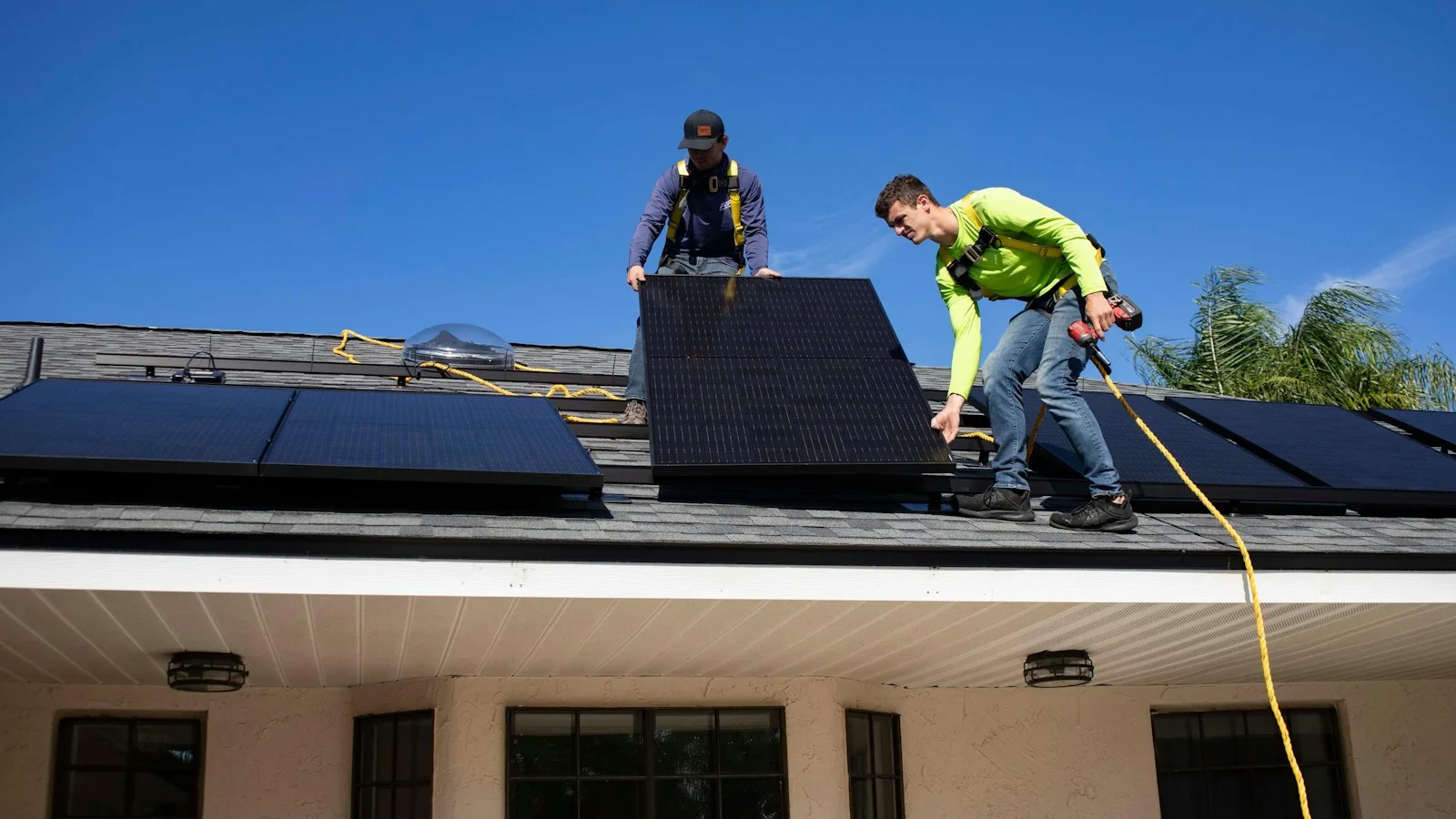
Professional installation costs depend on roof accessibility, electrical system condition, project location, and equipment configuration.
Grid-connected installations may also require utility coordination and applicable permits.
Net-metering applications can introduce additional documentation and interconnection costs.
How much electricity can a 5kW solar system generate?
A 5kWp solar array does not produce 5kW continuously throughout the day.
Actual production depends on sunlight and system performance.
For illustration, assume:
- Solar array capacity: 5kWp
- Peak sun hours: 4.5 per day
- Overall performance factor: 80%
Estimated daily production:
5 × 4.5 × 0.80 = 18kWh.
Estimated monthly production:
18 × 30 = 540kWh.
Estimated generation by system size
0 kWh300 kWh600 kWh900 kWh1.2K kWh3kWp5kWp10kWp
Modeled 30-day output using 4.5 peak sun hours and an 80% performance factor. Actual production varies by location, season, shading, and installation conditions.
These figures estimate energy generation, not guaranteed reductions in grid electricity consumption.
How much can you save with solar panels?
Electricity savings depend on how much solar energy you use directly, your electricity tariff, and whether excess generation receives export credits.
Consider a 5kWp system producing an estimated 540kWh per month.
Suppose the household directly consumes 75% of that electricity.
Self-consumed solar energy:
540 × 0.75 = 405kWh.
If the avoided electricity cost is ₱11 per kWh:
405 × ₱11 = ₱4,455 in illustrative monthly savings.
The remaining 135kWh may be exported, curtailed, or stored, depending on the system configuration.
Without an approved export arrangement or storage, excess solar generation may provide little additional financial benefit.
Solar electricity savings formula

Solar panel installation cost and payback period
The simple payback period estimates how many years of electricity savings would be needed to recover the initial installation cost.
Suppose:
- Installed solar system cost: ₱250,000
- Estimated monthly electricity savings: ₱4,455
- Estimated annual electricity savings: ₱53,460
Simple payback:
₱250,000 ÷ ₱53,460 = approximately 4.7 years.

This simple calculation excludes maintenance, equipment replacement, financing costs, electricity tariff changes, and solar panel degradation.
Actual financial payback may be longer.
For a more realistic comparison, homeowners should calculate net annual savings after recurring costs and consider the time value of money.
Is a 3kW or 5kW solar system more cost-effective?
A 3kW system generally has a lower initial installation cost, making it attractive for households with modest electricity consumption.
A 5kW system may offer better installed cost per watt, depending on equipment and installation pricing.
However, larger systems are not automatically more cost-effective.
If your household consumes little electricity during the day and does not have net metering or battery storage, a larger system may produce excess electricity that cannot be used economically.
The most cost-effective system is usually one sized around your electricity consumption and expected solar self-consumption.
Is it worth adding batteries to your solar system?
Battery storage can provide backup power and allow solar electricity generated during the day to be used at night.
However, batteries increase upfront costs and introduce additional equipment that may require eventual replacement.
For households primarily interested in reducing electricity bills, a grid-connected system without batteries may provide a faster financial payback.
For homes experiencing frequent brownouts, batteries may offer significant practical value even when the financial return is less attractive.
The decision should consider both electricity savings and the value of backup power.
Can solar panels eliminate your electricity bill?
Not necessarily.
Even when a solar installation generates as much energy as a household consumes over a month, the electricity bill may not become zero.
Several factors affect the final amount:
- Electricity purchased from the grid at night
- Fixed or minimum utility charges
- Solar production during cloudy or rainy periods
- Differences between retail electricity rates and export credit rates
- Net-metering arrangements and billing rules
For many Philippine homeowners, reducing grid electricity purchases is a more realistic initial goal than completely eliminating the electricity bill.
Should you install solar panels yourself?
DIY solar installations may reduce some labor expenses, but rooftop and grid-connected electrical systems introduce significant safety risks.
Improper installation can cause electric shock, fire, roof leaks, equipment damage, and unsafe grid backfeeding.
A qualified installer should evaluate roof structure, electrical protection, grounding, inverter compatibility, and applicable permitting requirements.
For grid-connected installations, follow the requirements of the relevant distribution utility and Philippine electrical regulations.
Frequently asked questions
How much does a 3kW solar system cost in the Philippines?
For preliminary budgeting, this article uses an illustrative range of ₱120,000 to ₱210,000 for a grid-connected system without batteries. Actual prices require current installer quotations and depend on equipment, installation complexity, and project location.
How much does a 5kW solar system cost?
Our illustrative planning range is ₱180,000 to ₱320,000 without batteries, or ₱280,000 to ₱480,000 for a hybrid configuration with modest battery storage. These are not verified market quotations.
How much does a 10kW solar system cost?
A 10kWp residential installation generally requires a larger budget because of the additional panels, mounting hardware, electrical components, and installation work. The illustrative ranges in this guide are ₱350,000 to ₱600,000 without batteries and ₱500,000 to ₱850,000 or more with battery storage.
Is a 5kW solar system enough for a house?
It can be sufficient to offset a substantial portion of electricity consumption in many homes. However, a 5kW system does not guarantee that all appliances can run simultaneously or that nighttime demand will be covered.
How many years do solar panels last?
Many solar panels have performance warranties extending 25 years or longer. Actual operating life depends on equipment quality, environmental exposure, maintenance, and installation conditions. Inverters and batteries may require replacement earlier.
Is solar power worth it in the Philippines?
It can be financially attractive for households with suitable roofs, significant daytime electricity consumption, and favorable installation costs. The strongest way to evaluate the investment is to compare actual installer quotations with your electricity consumption and realistic savings estimates.
Final verdict
A residential solar system can be a worthwhile investment for Philippine homeowners, but the best system is not necessarily the largest or most expensive.
A smaller grid-connected installation may offer good financial returns for a household that consumes most of its electricity during the day.
A hybrid system with LiFePO4 batteries may be more suitable when brownout protection and nighttime solar energy use are important.
Before purchasing, review your electricity bills, calculate your daytime consumption, assess your roof, and obtain itemized quotations from qualified installers.
Compare total installed cost, equipment warranties, expected generation, battery requirements, and long-term maintenance expenses.
Most importantly, evaluate the system using realistic savings assumptions rather than advertised claims of guaranteed zero electricity bills or unusually short payback periods.
When comparing solar panel installation cost, ask for an itemized quote covering panel and inverter models, battery specifications if included, mounting, electrical protection, labor, permits, and after-sales support. Compare the same scope of work: a lower solar panel installation cost may exclude items included in another proposal.
Continue with our solar savings guide, solar panel calculator, battery size calculator. Use the examples to compare assumptions before requesting a site-specific design.
For background on rooftop suitability, system planning, and choosing an installer, see the U.S. Department of Energy’s Homeowner’s Guide to Solar. It covers general planning principles; Philippine tariffs and utility requirements differ.