This 24V vs 48V comparison explains how 100Ah LiFePO4 batteries differ in stored energy, current demand, and inverter compatibility.
Both batteries have the same amp-hour (Ah) rating, but they do not store the same amount of energy.
A 48V-class 100Ah LiFePO4 battery typically stores twice as much energy as a 24V-class 100Ah battery. It can also deliver the same amount of power at approximately half the current, making it attractive for larger solar installations.
However, a 48V battery is not automatically better for every solar system. Your inverter’s battery voltage requirements, battery management system (BMS), electrical loads, and budget all matter.
This guide explains the differences, including battery capacity, estimated runtime, solar inverter compatibility, and practical applications for Philippine homes.
In this guide
24V vs 48V 100Ah LiFePO4 batteries: key differences
The primary difference is nominal voltage.
LiFePO4 batteries are commonly constructed using cells with a nominal voltage of approximately 3.2V.
A typical 24V-class LiFePO4 battery uses eight cells in series, resulting in a nominal voltage of 25.6V.
A typical 48V-class battery uses 16 cells in series, resulting in a nominal voltage of 51.2V.
| Specification | 24V 100Ah | 48V 100Ah |
|---|---|---|
| Typical nominal voltage | 25.6V | 51.2V |
| Capacity | 100Ah | 100Ah |
| Nominal stored energy | 2.56kWh | 5.12kWh |
| Typical series cell count | 8S | 16S |
| Current at 2,000W DC | 78.1A | 39.1A |
| Best suited for | Smaller compatible systems | Medium to larger compatible systems |
| Inverter compatibility | 24V-class inverter | 48V-class inverter |
Actual battery specifications vary by manufacturer. Some 48V-class battery systems use a different cell configuration, such as 15 cells in series, with a nominal voltage of approximately 48V.
Always follow the voltage specifications printed on the battery and inverter.
Does a 48V 100Ah battery have more capacity than a 24V 100Ah battery?
Yes. Although both batteries have a capacity of 100Ah, the 48V-class battery stores approximately twice as much nominal energy.
Battery energy is calculated using:
Energy (Wh) = Voltage (V) x Capacity (Ah)
For a 24V-class battery:
25.6V x 100Ah = 2,560Wh
For a 48V-class battery:
51.2V x 100Ah = 5,120Wh
This is why comparing batteries using amp-hours alone can be misleading.
For solar battery shopping, kilowatt-hours (kWh) provide a more useful measure of energy storage.
24V vs 48V: How long will a 100Ah battery last?
Battery runtime depends on the appliance’s average power consumption and the amount of usable energy available.
For this comparison, assume:
- 90% usable depth of discharge (DoD)
- 90% inverter conversion efficiency
- No additional household loads
- No solar charging during operation
The estimated usable AC energy is:
| Battery | Nominal energy | Estimated usable AC energy |
|---|---|---|
| 25.6V 100Ah | 2.56kWh | 2.07kWh |
| 51.2V 100Ah | 5.12kWh | 4.15kWh |
Estimated runtime by appliance load
| Average appliance load | 24V 100Ah | 48V 100Ah |
|---|---|---|
| 100W | 20.7 hours | 41.5 hours |
| 300W | 6.9 hours | 13.8 hours |
| 500W | 4.1 hours | 8.3 hours |
| 800W | 2.6 hours | 5.2 hours |
| 1,000W | 2.1 hours | 4.1 hours |
| 1,500W | 1.4 hours | 2.8 hours |
These are theoretical estimates. Actual runtime varies based on temperature, battery condition, inverter losses, BMS restrictions, and appliance consumption.
Higher-power loads may exceed a battery’s continuous discharge current rating even when its nominal energy capacity appears sufficient.
Can a 24V 100Ah battery run a 3kW solar inverter?
Yes, provided the inverter is designed for a 24V-class battery bank and the battery can supply the required current.
However, there is an important distinction between powering the inverter and delivering its full rated output.
Suppose a 3kW inverter is operating at full output with 90% conversion efficiency.
The approximate battery current would be:
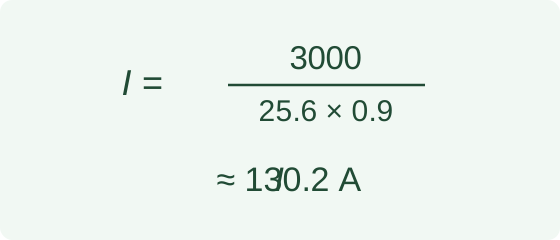
A 24V 100Ah LiFePO4 battery with a BMS rated for only 100A continuous discharge would not be sufficient to support that full output on its own.
The inverter may trigger a low-voltage or battery protection shutdown under heavy load.
This is why checking the BMS discharge current is just as important as checking battery voltage and amp-hour capacity.
Can a 48V 100Ah battery run a 5kW solar inverter?
A compatible 48V-class battery can power a 5kW inverter, but the battery’s discharge rating determines whether the inverter can operate at full output.
At 5,000W and 90% conversion efficiency:
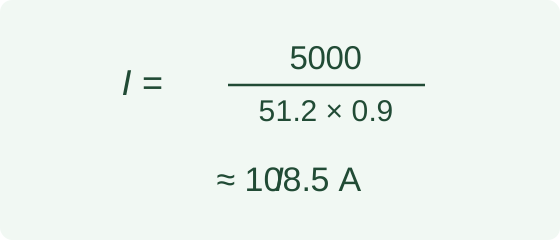
If the battery has a 100A continuous discharge limit, it may not support a sustained 5kW AC load.
At the same assumptions, a 100A battery could theoretically supply approximately:
51.2 x 100 x 0.9 = 4,608W
This is a simplified calculation. Actual allowable power also depends on battery voltage under load, BMS behavior, wiring, temperature, and inverter requirements.
For a 5kW installation, consider a battery bank with sufficient continuous discharge capability rather than selecting one based only on its 100Ah capacity.
Why do larger solar systems often use 48V batteries?
A higher battery voltage reduces the current required to deliver the same amount of electrical power.
For example, at a 2,000W DC load:
| Battery voltage | Approximate current |
|---|---|
| 25.6V | 78.1A |
| 51.2V | 39.1A |
This matters because higher current generally requires more attention to conductor sizing, connection quality, protection devices, and resistive losses.
For the same conductor resistance, halving the current reduces resistive power loss to approximately one-quarter.
That does not mean a 48V system always uses smaller cables. Actual cable sizing must consider current, conductor length, voltage drop, insulation rating, installation conditions, and applicable electrical standards.
For larger inverter systems, 48V-class batteries are often more practical because of their lower current requirements.
Can you connect a 24V battery to a 48V solar inverter?
No. A single 24V-class battery should not be connected directly to an inverter that requires a 48V-class battery bank.
The voltage is incompatible, and the inverter may fail to start or trigger protection.
Similarly, a 48V-class battery should not be connected to a 24V inverter.
Can two 24V batteries be connected in series to create 48V?
Potentially, but only when the battery manufacturer explicitly supports series operation.
Two compatible 25.6V 100Ah batteries connected in series would provide:
- Nominal voltage: 51.2V
- Capacity: 100Ah
- Nominal energy: 5.12kWh
However, series connection requires appropriate battery balancing, compatible BMS operation, matched batteries, and suitable protection.
Many integrated LiFePO4 batteries prohibit series connections.
Never assume that two batteries can be connected in series simply because their nominal voltages add together.
24V vs 48V: Which battery suits Philippine homes?
A 24V-class 100Ah battery may be appropriate for smaller installations with modest loads and a compatible 24V inverter.
A 48V-class 100Ah battery is generally more attractive for larger systems, particularly those designed around 3kW to 5kW inverters that support 48V batteries.
| Household requirement | Recommended direction |
|---|---|
| Basic lighting and electronics | 24V may be sufficient |
| Refrigerator and essential backup loads | Either, depending on inverter and load |
| 1HP inverter air conditioner | 48V may offer better expansion options |
| Multiple high-power appliances | Consider a properly sized 48V battery bank |
| Future 5kW solar inverter upgrade | Consider 48V compatibility early |
The recommendation is not based on voltage alone. The correct battery must provide enough usable energy and discharge current for the intended load.
Frequently asked questions
Is 48V better than 24V for solar batteries?
For higher-power systems, 48V-class batteries generally offer lower current requirements and easier scaling. For smaller systems, 24V can still be practical.
Does a 48V 100Ah battery last twice as long as a 24V 100Ah battery?
Under identical load, usable depth of discharge, and efficiency assumptions, a 51.2V 100Ah battery stores twice as much nominal energy as a 25.6V 100Ah battery and can theoretically run the load about twice as long.
Can I mix 24V and 48V batteries?
Not directly within the same battery bank. Mixing different nominal voltages without a properly engineered conversion and control system is unsafe.
Is a 48V 100Ah battery enough for a 1HP air conditioner?
It may support several hours of operation, depending on actual consumption. For example, at an average 800W AC load and the assumptions used above, estimated runtime is approximately 5.2 hours.
Is a 48V battery more expensive than a 24V battery?
A 48V-class 100Ah battery usually costs more than a comparable 24V-class 100Ah battery because it contains approximately twice the nominal stored energy. Compare prices per usable kWh, warranty, BMS specifications, and cell quality rather than purchase price alone.
Final verdict
A 48V 100Ah LiFePO4 battery stores approximately twice as much energy as a 24V 100Ah battery and requires about half the current to deliver the same power.
For smaller solar systems, a 24V battery may be sufficient and economical.
For larger installations, especially those using compatible 3kW to 5kW solar inverters, a 48V-class battery is often a better long-term choice.
Before purchasing, verify the inverter’s supported battery voltage, the battery’s continuous discharge current, and the usable energy required for your household appliances.
Continue with our battery runtime calculator, solar battery capacity guide, inverter size calculator. Use the examples to compare assumptions before requesting a site-specific design.
For general context on storing solar electricity for later use, see the storage section in the U.S. Department of Energy’s Homeowner’s Guide to Solar. For compatibility and operating limits, check the specifications for your exact battery and inverter.
For a 24V vs 48V purchase comparison, ask the supplier to confirm the inverter battery-input voltage, the battery operating-voltage range, continuous BMS current, and any supported communication protocol. Compare usable watt-hours and discharge limits alongside the price, rather than judging capacity from the Ah label alone.