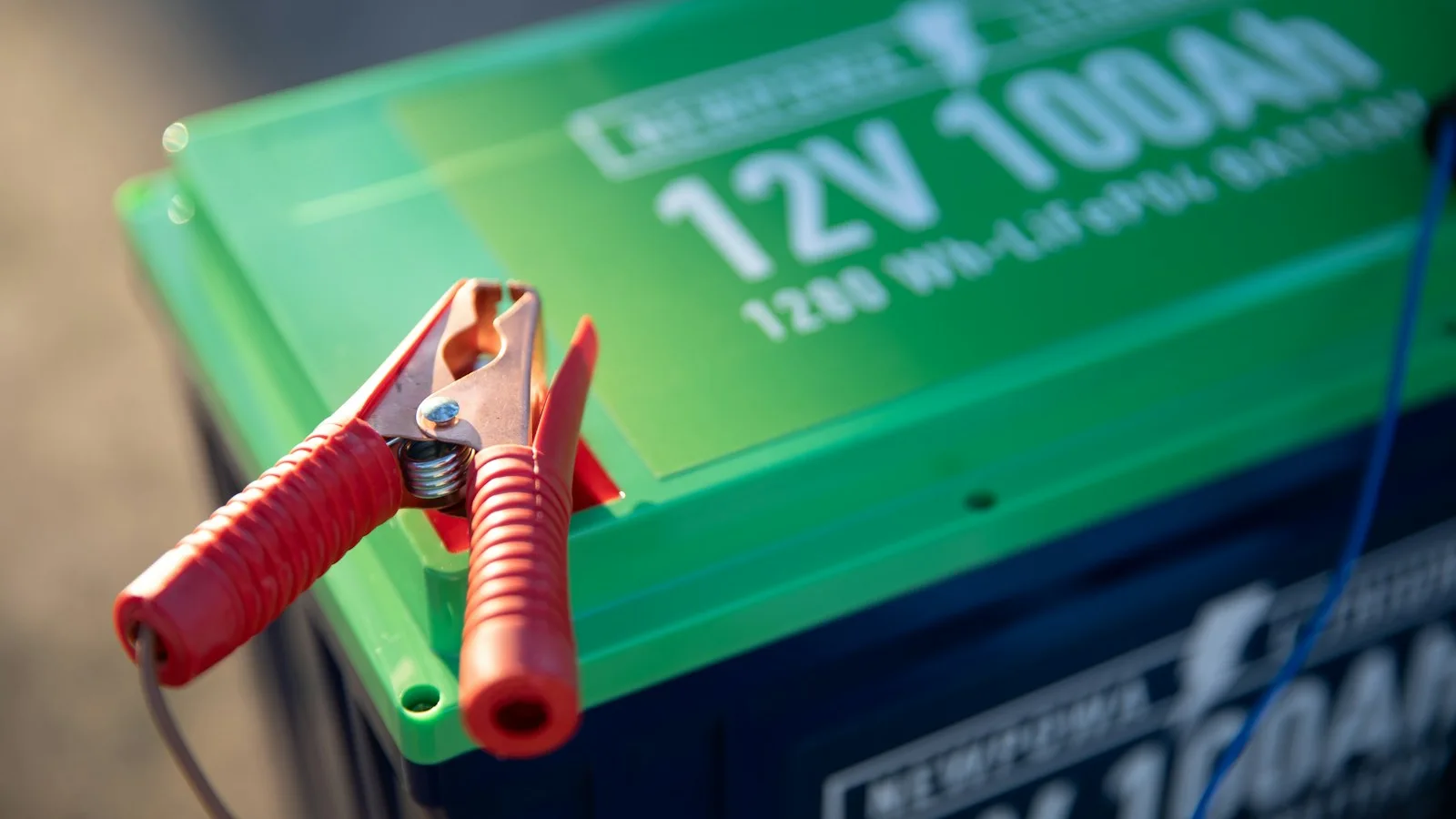
A 100Ah LiFePO4 battery can last anywhere from a few hours to more than a day, depending on its voltage, the appliances connected, and how much electricity those appliances consume.
One common mistake when buying solar batteries in the Philippines is assuming that all 100Ah batteries store the same amount of energy.
They don’t.
A 12.8V 100Ah battery stores approximately 1.28kWh, while a 25.6V 100Ah battery stores 2.56kWh. A 51.2V 100Ah battery stores 5.12kWh.
That means a 48V-class 100Ah battery can store four times as much energy as a 12V-class 100Ah battery.
In this guide, we’ll calculate how long each battery can run common household appliances, explain what affects runtime, and help you choose the right battery for your solar inverter.
In this guide
Quick answer: How long does a 100Ah LiFePO4 battery last?
The following estimates assume:
- 90% usable battery capacity
- 90% inverter efficiency
- Constant appliance power consumption
- No incoming solar or utility charging
- A battery and inverter capable of supporting the load
| Appliance load | 12.8V 100Ah | 25.6V 100Ah | 51.2V 100Ah |
|---|---|---|---|
| 50W | 20.7 hours | 41.5 hours | 82.9 hours |
| 100W | 10.4 hours | 20.7 hours | 41.5 hours |
| 200W | 5.2 hours | 10.4 hours | 20.7 hours |
| 300W | 3.5 hours | 6.9 hours | 13.8 hours |
| 500W | 2.1 hours | 4.1 hours | 8.3 hours |
| 1,000W | 1.0 hour | 2.1 hours | 4.1 hours |
| 1,500W | 0.7 hour | 1.4 hours | 2.8 hours |
Estimates rounded to one decimal place. These are energy-based calculations, not guarantees that a particular battery or inverter can deliver the required current.
Key takeaway: Battery voltage matters just as much as amp-hour capacity when comparing stored energy.
Understanding 12V, 24V and 48V LiFePO4 batteries
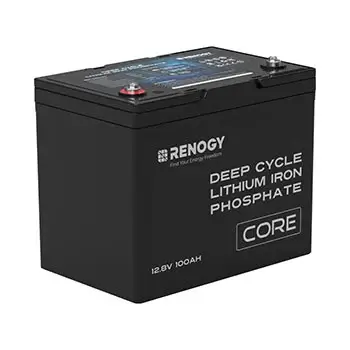
12.8V 100Ah LiFePO4 Battery
1,280Wh
Commonly used for small backup systems, lighting, camping, DC equipment, and compatible 12V inverters.
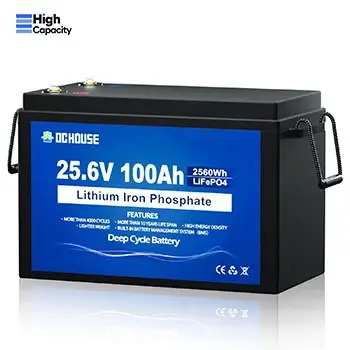
25.6V 100Ah LiFePO4 Battery
2,560Wh
Suitable for compatible 24V solar inverters, small residential backup systems, and moderate appliance loads.
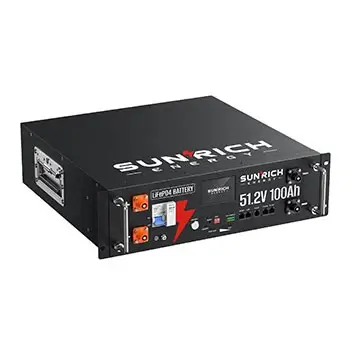
51.2V 100Ah LiFePO4 Battery
5,120Wh
Commonly used in larger residential battery systems with compatible 48V-class inverters.
Battery energy comparison
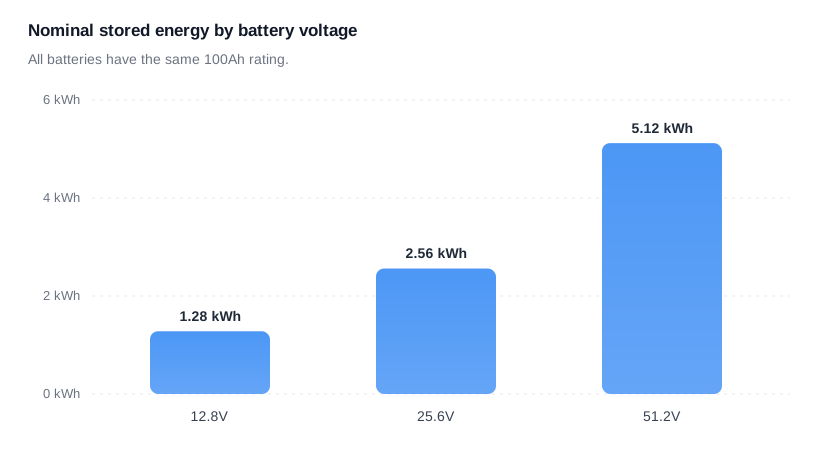
Although all three batteries are rated at 100Ah, their nominal energy capacities are different.
This is why comparing batteries by amp-hours alone can be misleading.
For a meaningful comparison, use watt-hours (Wh) or kilowatt-hours (kWh).
How to calculate LiFePO4 battery runtime
The basic formula is:
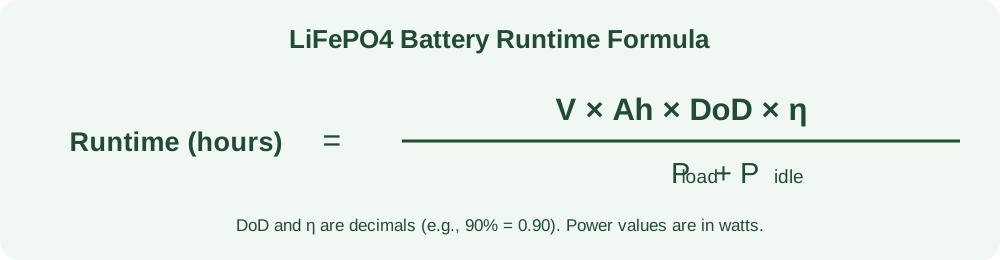
Where:
- Battery voltage: Nominal battery voltage.
- Capacity (Ah): Battery capacity in amp-hours.
- Depth of discharge (DoD): The portion of battery capacity used.
- Efficiency: Energy remaining after estimated inverter conversion losses.
- Load: Total appliance consumption in watts.
Example: 25.6V 100Ah battery running a 500W appliance
First, calculate the battery’s nominal energy: 25.6 x 100=2,560Wh
Apply 90% usable capacity: 2,560 x 0.90=2,304Wh
Apply 90% inverter efficiency: 2,304 x 0.90=2,073.6Wh
Divide by the appliance load: 2,073.6 / 500=4.15 hours
The estimated runtime is 4 hours and 9 minutes.
This calculation assumes the battery’s BMS supports the discharge current and the inverter can supply the appliance continuously.
Calculate your own battery runtime
This interactive calculator uses the same calculation approach as our approved Solar Battery Runtime Calculator v3, with selectable voltage, battery capacity and custom values.
How long can a 100Ah LiFePO4 battery run household appliances?
These are illustrative appliance loads, not universal product ratings.
| Appliance | Example power | 12.8V | 25.6V | 51.2V |
|---|---|---|---|---|
| Wi-Fi router | 15W | 69.1h | 138.2h | 276.5h |
| Electric fan | 60W | 17.3h | 34.6h | 69.1h |
| LED TV | 100W | 10.4h | 20.7h | 41.5h |
| Refrigerator | 150W | 6.9h | 13.8h | 27.6h |
| Laptop + fan + lights | 200W | 5.2h | 10.4h | 20.7h |
| Inverter air conditioner | 900W | 1.2h | 2.3h | 4.6h |
For a refrigerator, the 150W assumption represents constant average consumption. Real refrigerators cycle on and off, so the correct calculation should use measured energy consumption over time.
Similarly, inverter air conditioners adjust compressor output according to cooling demand. Actual runtime may differ substantially from the fixed 900W example.
What affects battery runtime?
Depth of discharge
LiFePO4 batteries can generally use a large portion of their rated capacity, but the appropriate discharge limit depends on the battery and system settings.
Higher depth of discharge increases usable energy per cycle but can reduce cycle life. Victron Energy
Inverter efficiency and standby consumption
An inverter consumes energy when converting DC battery power into AC electricity. It may also consume power while idle.
For low-wattage appliances, standby consumption can noticeably reduce runtime. A 15W router powered through an inverter with substantial idle draw may run for far less time than a simplified 15W calculation suggests.
Battery management system
The BMS protects the battery from operating outside its supported electrical and thermal limits.
For example, Victron’s 100Ah Lithium NG battery specifications list 100A continuous discharge for certain 12.8V, 25.6V and 51.2V models. This is a product-specific rating, not a guarantee for every 100Ah battery. Victron Energy
Battery age and temperature
Battery capacity can decline over time. High operating temperatures and repeated cycling influence long-term performance, while temperature also affects available capacity. victronenergy.it
Solar charging during operation
When solar panels are generating electricity, some appliance demand can be supplied by solar power rather than the battery.
The runtime calculations in this article intentionally exclude incoming solar energy so homeowners can estimate battery-only backup during a brownout or at night.
Which 100Ah LiFePO4 battery should you choose?
| System | Best suited for |
|---|---|
| 12.8V 100Ah | Small DC loads, portable systems, modest backup requirements |
| 25.6V 100Ah | Compatible 24V hybrid inverters, moderate backup loads |
| 51.2V 100Ah | Larger home solar systems and compatible 48V hybrid inverters |
Choose battery voltage based on your inverter’s required DC input, not simply which battery offers the longest runtime.
For example, the 24V PowMr inverter covered in our previous guide requires a compatible 24V-class battery system. A 51.2V battery cannot be connected directly just because it stores more energy.
If you’re still selecting an inverter, compare total system cost, battery discharge current, future expansion requirements and available equipment support.
Frequently asked questions
How long will a 12V 100Ah LiFePO4 battery run a 100W appliance?
Approximately 10.4 hours using 12.8V nominal voltage, 90% usable capacity and 90% inverter efficiency.
Is a 24V 100Ah battery twice as powerful as a 12V 100Ah battery?
It stores twice the nominal energy at the same Ah rating, but maximum output power depends on the battery’s discharge-current rating and the connected equipment.
Can a 48V 100Ah battery run a 1HP air conditioner?
Potentially. At a constant 900W electrical load, the estimated runtime is 4.6 hours. Actual consumption, compressor behavior and inverter compatibility must be checked.
Can I connect two 12V 100Ah batteries to make a 24V system?
Only if the battery manufacturer explicitly supports series connection and the batteries are appropriately matched. Battery balancing, BMS behavior and installation requirements must be considered. Victron Energy
Does a 100Ah LiFePO4 battery last longer than a 100Ah lead-acid battery?
Under many comparable conditions, LiFePO4 provides more usable energy and longer cycle life. The actual comparison depends on permitted discharge depth, battery quality and operating conditions.
Final recommendation
A 100Ah battery rating does not tell you enough to estimate runtime on its own.
For Philippine homeowners planning a solar installation, the most useful specifications are nominal voltage, stored energy in kWh, usable capacity, continuous discharge current and inverter compatibility.
Start with the appliances you need to power, calculate their daily energy requirements, then choose a battery bank capable of supplying both the required energy and power.
Use the calculator above for an initial estimate, and confirm the final system design against the equipment manufacturers’ specifications.
Continue with our battery runtime calculator, battery capacity sizing guide, 24V and 48V battery comparison. Use the examples to compare assumptions before requesting a site-specific design.
For general context on storing solar electricity for later use, see the storage section in the U.S. Department of Energy’s Homeowner’s Guide to Solar. For compatibility and operating limits, check the specifications for your exact battery and inverter.